

Point Guard Position
Welcome to Best Basketball World, a basketball-focused website created for players, fans, and anyone looking to learn more about the game and find the right basketball gear. Our goal is simple: to make basketball information easier to understand and basketball shoe choices easier to make.
What Is the Point Guard Position in Basketball?
If basketball had a quarterback, it would be the point guard. Every offense runs through this position, and how well a team’s point guard reads the game often decides how the whole unit performs. Here’s a complete breakdown of what the role actually involves at Best Basketball World.
What Is a Point Guard?
The point guard, commonly labelled the “1” in basketball’s positional numbering system, is the player responsible for leading the offense. They’re typically the first to touch the ball after a rebound or inbound, bringing it up the court and setting the tone for whatever happens next.
Unlike positions built around scoring or rebounding, the point guard’s main job is decision-making. Every possession, they’re reading the defense and deciding whether to push the pace, run a set play, or slow things down.
Core Responsibilities
Bringing the ball up the court
The point guard is almost always the one advancing the ball from defense to offense, deciding in real time whether to push in transition or walk it up for a half-court set.
Running the offense
Coaches rely on their point guard to call plays, set up spacing, and get the ball to the right player at the right time. This requires a strong grasp of the playbook and the ability to adjust mid-possession when the defense doesn’t react as expected.
Distributing the ball
Point guards typically lead their teams in assists. Elite vision and passing ability let them find open teammates, whether that’s a quick pocket pass, a cross-court skip, or a perfectly timed alley-oop.
Reading the defense
Part of the job is recognising mismatches, say, a smaller defender guarding a bigger teammate in the post, and exploiting them before the defense can adjust.
Controlling tempo
A good point guard manages the rhythm of the game itself, pushing the pace when their team has an advantage in transition, or deliberately slowing things down to protect a lead or work for a better shot.
Skills That Define a Great Point Guard
- Ball-handling: tight, reliable dribbling under pressure, since the ball is in their hands more than anyone else’s
- Court vision: the ability to see passing lanes and openings before they fully develop
- Basketball IQ: understanding not just their own role but how all five players on the floor fit together on a given play
- Decision-making under pressure: knowing when to shoot, pass, or pull back, often in a fraction of a second
- Leadership: point guards are frequently seen as on-court extensions of the coach, communicating adjustments and keeping teammates organised
Physical Traits
Point guards are traditionally the shortest players on the floor, prioritising speed, quickness, and agility over height. That said, this has shifted over the years, today’s game features bigger, more versatile guards who combine traditional playmaking with scoring ability, blurring the line between point guard and shooting guard.
Scoring vs. Facilitating: Two Types of Point Guards
Not every point guard fits the same mould. Broadly, the position splits into two styles:
- Pass-first point guards, who prioritise setting up teammates and controlling the offense, often racking up high assist numbers with modest scoring totals
- Scoring point guards, a more modern trend, who combine traditional ball-handling and playmaking with the ability to score at a high volume themselves
Most great point guards sit somewhere on this spectrum rather than at a fixed extreme, adjusting their approach based on what their team needs on a given night.
Famous Point Guards and What Made Them Great
- Magic Johnson redefined the position with his size and vision, a 6’9″ point guard who could see the entire floor and deliver passes few others could
- John Stockton – NBA all-time leader in assists.
- Steve Nash won back-to-back MVPs running an up-tempo offense built almost entirely around pace and precision passing
- Chris Paul built a reputation on elite decision-making, defense, and some of the best floor leadership of his generation
- Stephen Curry pushed the position further still, pairing traditional point guard skills with historic shooting range, changing how teams think about spacing and offense
A point guard, often called the “floor general,” brings the ball up the court, runs the offence, makes passes, and creates scoring chances for teammates.
Why the Point Guard Position Matters So Much
A team can have talented scorers and strong defenders, but without someone organising the offense and making smart decisions possession after possession, that talent often goes underused. The point guard is frequently the difference between a team of good individual players and a team that actually functions as a unit.
Real Questions Beginners Ask
What number position is the point guard?
The point guard is traditionally labelled the “1” in basketball’s five-position numbering system.
Do point guards need to be short?
Not necessarily. While shorter, quicker players have traditionally filled the role, modern basketball has seen taller, more versatile players succeed at point guard too.
What's the difference between a point guard and a shooting guard?
Point guards are generally the primary ball-handler and playmaker, while shooting guards focus more on scoring, though the two roles increasingly overlap in modern basketball.
What stat best reflects a good point guard?
Assists are the most commonly cited stat, though a strong assist-to-turnover ratio is often a better indicator of genuine decision-making quality.
Can a point guard also be a top scorer?
Yes. Modern point guards like Stephen Curry have shown that elite scoring and traditional playmaking aren’t mutually exclusive.
Our Reviews
What they say about us
Recent Blogs
Picking a basketball shoe in 2026 means wading through more signature lines, cushioning tech, and marketing buzzwords than ever. Nike, Adidas, Under …
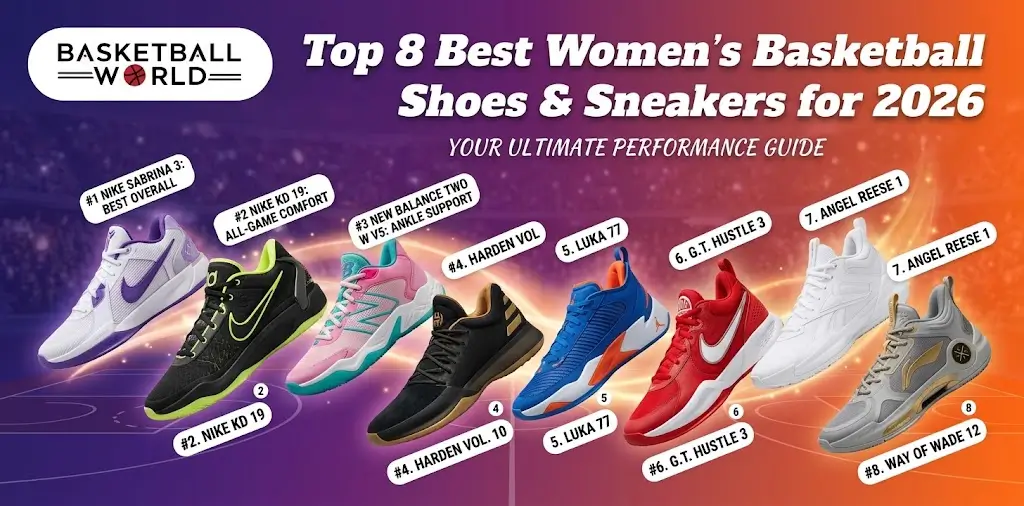
Find the best women's basketball shoes for superior performance and comfort. Our expert picks offer exceptional support, traction, durability the court.
Find the fundamental variables, estimating tips, padding advancements, and support methodologies for finding the best men's basketball shoes.


