Small Forward SF
Welcome to Best Basketball World, a basketball-focused website created for players, fans, and anyone looking to learn more about the game and find the right basketball gear. Our goal is simple: to make basketball information easier to understand and basketball shoe choices easier to make.
What Is a Small Forward in Basketball?
A small forward (SF) is one of the five main positions in basketball, usually called the “3” or three. The small forward is often the most versatile player on the team because they must score, defend, rebound, pass, and sometimes handle the ball like a guard.
Think of the small forward as an all-rounder. They are usually bigger and stronger than a shooting guard but quicker and more mobile than a power forward. This allows them to play both outside near the three-point line and inside near the basket.
Main Responsibilities of a Small Forward
A small forward does a little bit of everything. They must be able to score, defend multiple positions, rebound, and support teammates.
Responsibility | What It Means in Simple Words |
Score from outside, mid-range, and by driving to the basket. | |
Drive to the basket | Use strength and athleticism to attack the rim for layups or dunks. |
Shoot from outside | Make three-pointers and mid-range shots to stretch the defence. |
Rebound | Help collect missed shots, especially on offence. |
Defend multiple positions | Guard guards, wings, and sometimes bigger forwards. basketball-reference+1 |
Pass out of double teams and make simple playmaking decisions. | |
Run in transition | Sprint ahead on fast breaks and finish at the rim. |
Attack the basket aggressively and get to the free-throw line. |
What a Small Forward Does on Offence
1. Score From the Wing
Small forwards usually start many plays from the wing, which is the area near the sideline outside the three-point line. From there, they can shoot, drive, pass, or cut toward the basket.
For a beginner, remember this: the small forward is often the team’s most flexible scorer. They can score like a guard from outside or attack like a bigger forward near the basket.
2. Drive to the Basket
One of the biggest differences between a small forward and a shooting guard is how they attack. A shooting guard may often stop for a jump shot, while a small forward is more likely to keep driving toward the basket for a layup or dunk.
A strong small forward uses a mix of speed, strength, and ball handling to get past defenders. Once inside, they can finish at the rim, draw a foul, or pass to an open teammate.
3. Shoot Three-Pointers
Modern small forwards need to shoot from long range. When a small forward can make three-pointers, defenders must come outside to guard them, creating more space for teammates to drive and operate near the basket.
A small forward does not need to shoot as much as a specialist shooter, but they must be respected as an outside scoring threat.
4. Move Without the Ball
Small forwards also score by moving without the ball. They can cut to the basket, use screens, spot up in the corner, or attack from the wing after receiving a pass.
Good movement makes the defence work harder. Instead of standing in one place, a smart small forward keeps looking for open space and easy scoring chances.
5. Rebound on Offence
Small forwards are often expected to crash the offensive glass. This means running toward the basket after a missed shot to try to get the rebound.
An offensive rebound can give the team a second chance to score. It can also lead to an easy putback, a foul, or a kick-out pass to an open shooter.
6. Help Start the Offence
Some small forwards can bring the ball up the court and start the half-court offence, especially when the point guard is being pressured. These players are sometimes called point forwards because they combine forward size with guard-like playmaking.
A small forward does not always need to be the main ball-handler, but being able to dribble, pass, and make decisions makes them much more valuable.
What a Small Forward Does on Defence
1. Defend Multiple Positions
One of the most important jobs of a small forward is defensive versatility. They may need to guard a quick shooting guard, a strong power forward, or the opponent’s best wing scorer.
This is why small forwards need both speed and strength. Speed helps them stay with smaller players, while strength helps them compete against bigger opponents.
2. Guard the Opponent’s Best Scorer
Coaches often ask small forwards to defend the opposing team’s best wing scorer. This could be a dangerous shooter, a strong driver, or an athletic scorer who can score in many ways.
A good defensive small forward makes that scorer work hard for every point instead of allowing easy shots.
3. Protect the Paint
Small forwards must stop opponents from driving easily into the painted area, also called the paint or key. They use their body, positioning, and quick feet to cut off driving lanes
They do not always need to block every shot. Simply forcing the attacker to change direction, pass, or take a difficult shot is good defence.
4. Contest Shots
When an opponent catches the ball for a shot, the small forward should contest it by raising a hand and making the shot more difficult. The goal is to affect the shot without fouling.
A good contest requires balance. If the defender jumps wildly or runs into the shooter, the opponent may get free throws.
5. Rebound on Defence
Small forwards are usually secondary rebounders behind the power forward and centre, but they still need to box out and collect rebounds.
Defensive rebounds are important because they end the opponent’s possession and allow the team to start a fast break.
Skills Every Small Forward Needs
Skill | Why It Matters |
Scoring | Small forwards must score inside, outside, and in transition. |
Athleticism | Helps them drive, finish at the rim, defend, and rebound. |
Ball handling | Helps them attack from the wing and create their own shot. |
Passing | Helps them find open teammates when defenders collapse. |
Rebounding | Gives the team extra possessions and stops opponent possessions. |
Defensive versatility | Allows them to guard different types of players. |
Basketball IQ | Helps them decide when to shoot, pass, drive, or slow down. |
Free-throw shooting | Important because attacking players often get fouled. |
Small Forward vs Shooting Guard
Beginners often mix up small forwards and shooting guards because both are called wings and both can score from the perimeter. The main difference is that small forwards are usually stronger, more physical, and more involved in rebounding and interior defence.
Feature | Shooting Guard (SG) | Small Forward (SF) |
Position number | 2 | 3 |
Main job | Score, especially from the perimeter | Score, defend, rebound, and do a bit of everything |
Typical style | More jump shots and perimeter play | More driving, physical play, and versatility |
Rebounding | Usually less involved | Usually, a bigger rebounding contribution |
Defence | Often guards opposing guards | Often guards wings and sometimes bigger forwards |
Playmaking | Can pass, but usually secondary | Often helps create and may even run the offence |
These roles can overlap in modern basketball, and many players can play both positions.
Famous Small Forwards
LeBron James
LeBron James is one of the most famous small forwards in basketball history. He is known for his size, strength, passing, scoring, rebounding, and ability to control a game in many different ways.
LeBron shows why the small forward position is so versatile: he can score like a forward, pass like a point guard, rebound like a big man, and defend multiple positions.
Larry Bird
Larry Bird is another legendary small forward. He played for the Boston Celtics and was known for his shooting, passing, rebounding, basketball intelligence, and clutch performances.
Bird proved that a small forward does not need to be the most athletic player on the court to dominate. His skill, vision, and understanding of the game made him one of the greatest forwards ever.
Kevin Durant
Kevin Durant is a modern example of an elite small forward. He is known for his nearly unstoppable scoring ability, smooth shooting stroke, and ability to score from almost anywhere on the court.
Durant can shoot three-pointers, score in the mid-range, attack the basket, and defend when needed. His combination of height and skill makes him one of the most difficult players to guard.
Other Famous Small Forwards
- Scottie Pippen – Known for elite defence, playmaking, and championship success with the Chicago Bulls.
- James Worthy – A versatile Lakers forward who could score inside and outside.
- Kawhi Leonard – Known for strong two-way play, defence, and efficient scoring.
- Giannis Antetokounmpo – Often plays forward and uses size, speed, and strength to attack the rim.
- Jayson Tatum – A modern small forward who can score, rebound, pass, and defend.
Small Forward vs Power Forward
The small forward and power forward are both forwards, but they usually play differently.
Feature | Small Forward (SF) | Power Forward (PF) |
Position number | 3 | 4 |
Typical role | Versatile wing player | Strong interior scorer and rebounder |
Main strength | Speed, athleticism, versatility | Strength, rebounding, inside scoring |
Shooting | Often shoots from the wing and drives | Often scores closer to the basket, though many now shoot threes |
Defence | Guards wings and multiple positions | Guards bigger forwards and protects the paint |
Rebounding | Secondary rebounder | Usually a primary rebounder |
Small forwards play more on the outside and attack from the wing, while power forwards usually play closer to the basket.
Real Questions Beginners Ask
Is a small forward only a scorer?
No. A small forward must also defend, rebound, pass, move without the ball, and help the team in many situations. Scoring is important, but versatility is what defines the position.
What number is a small forward?
A small forward is usually called the “3” or three. In a traditional lineup, the positions are numbered 1 to 5: point guard, shooting guard, small forward, power forward, and centre.
Can a small forward be short?
Yes. Height helps, but it is not the only factor. A shorter small forward can succeed with quickness, shooting, defence, ball handling, and smart decision-making. However, many small forwards are taller and use their size to shoot over defenders and rebound better.
What is a “wing” in basketball?
A wing is a player who plays on the side of the court, usually between the three-point line and the sideline. Shooting guards and small forwards are both commonly called wings because they often play in similar areas.
Can a small forward bring the ball up the court?
Yes. Some small forwards can bring the ball up and start the offence, especially if they have good ball-handling and passing skills. These players are sometimes called point forwards.
Who is the best small forward ever?
Many fans and experts consider LeBron James the greatest small forward ever, while Larry Bird and Kevin Durant are also frequently mentioned among the best. Each player brought a different strength: LeBron’s all-around dominance, Bird’s skill and passing, and Durant’s elite scoring.
What should a beginner practise to become a small forward?
Start with these six skills:
- Layups and finishing: Practise finishing with both hands.
- Three-point shooting: Build confidence from the wing and corner.
- Mid-range shooting: Learn pull-ups and catch-and-shoot shots.
- Ball handling: Practise attacking from the wing and changing direction.
- Defensive slides: Learn to stay low and guard quick players.
- Rebounding: Practise boxing out and securing rebounds.
Simple Example for Beginners
Imagine your team’s point guard brings the ball up the court. You, as the small forward, are standing on the right wing. The point guard passes you the ball.
You now have four choices:
- Shoot a three-pointer if you are open.
- Drive to the basket if your defender is too far away.
- Pass if a teammate is open after the defence collapses.
- Cut to the basket if your defender is not watching you.
That flexibility—being able to shoot, drive, pass, defend, and rebound—is what makes the small forward such an important position.
Our Reviews
What they say about us
Recent Blogs
Picking a basketball shoe in 2026 means wading through more signature lines, cushioning tech, and marketing buzzwords than ever. Nike, Adidas, Under …
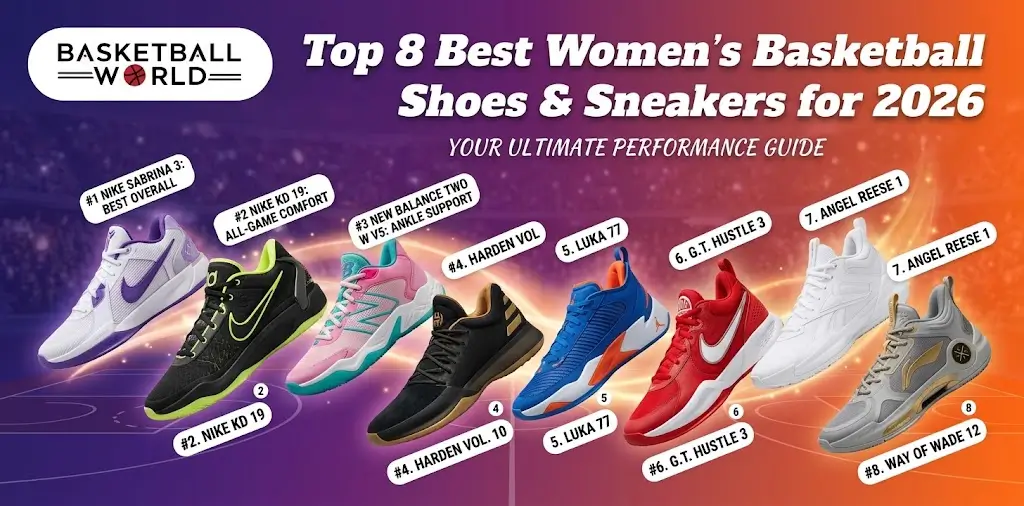
Find the best women's basketball shoes for superior performance and comfort. Our expert picks offer exceptional support, traction, durability the court.
Find the fundamental variables, estimating tips, padding advancements, and support methodologies for finding the best men's basketball shoes.


